
Fishing and Sushi Experience in Japan: From the Sea to the Table
For many travelers, sushi is one of the first foods that comes to mind when they think of Japan.
But sushi is often misunderstood.
It is not simply raw fish on top of rice. It is not only a luxury restaurant experience. It is not the same as the rolls that became popular overseas. And at its best, sushi is not just something you eat. It is something you watch, understand, and remember.
A private fishing and sushi experience in Japan brings this idea to life.
You begin the day on the sea. You feel the wind, see the coastline, and try to catch fish in Japanese waters. Then the experience continues into sushi or premium Japanese dining, where the seafood culture of Japan becomes much more than a meal.
At Catch to Table Japan, we create private sea-to-table experiences for travelers who want to connect fishing, Japanese cuisine, and memory-making into one carefully arranged day.
Why fishing and sushi feel uniquely Japanese
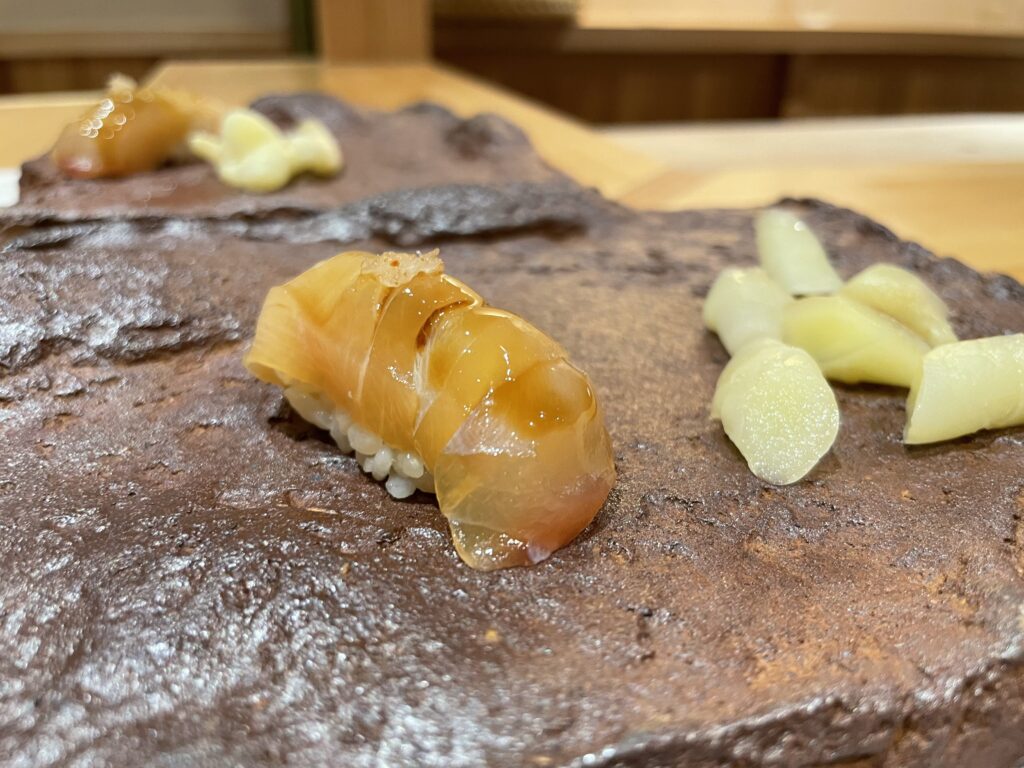
Japan is surrounded by the sea, and seafood has shaped its cuisine for centuries.
Sushi itself did not begin as the refined counter-style meal many people imagine today. Its older roots are connected to preservation. Before refrigeration, fish was preserved with salt and fermented rice. Over time, sushi evolved into many regional forms, from fermented styles to pressed sushi and eventually to the hand-formed nigiri sushi associated with Edo, now Tokyo.
This history still matters.
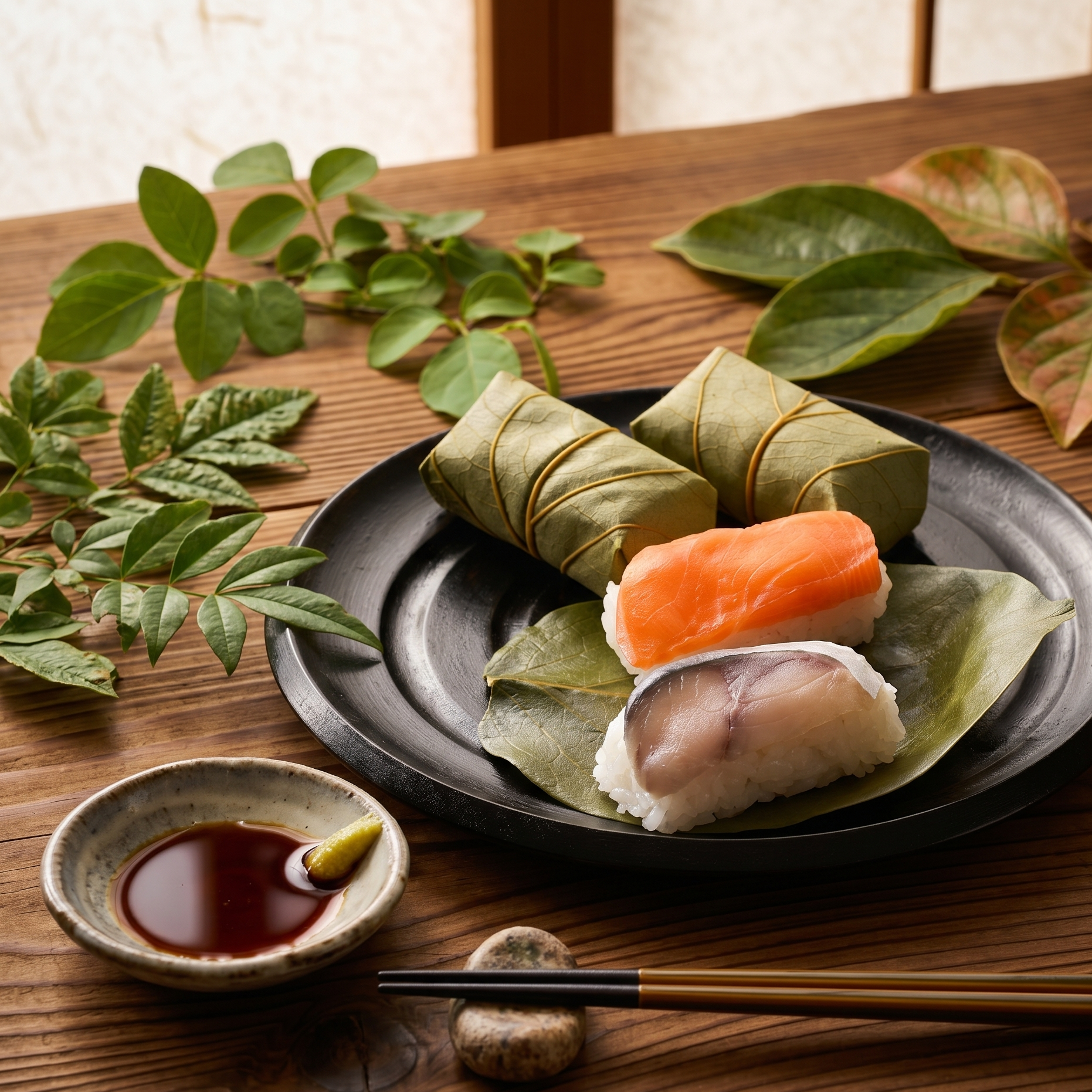
Kakinoha sushi, for example, is a regional style in which salted mackerel and vinegared rice are wrapped in persimmon leaves. Saba sushi, or mackerel sushi, also reflects a culture of preserving and transporting fish from coastal areas to inland cities. These are not simply “old versions” of sushi. They show how deeply Japanese people connected fish, rice, preservation, travel, and regional identity.
Modern nigiri sushi developed in Edo as a faster, more direct style: vinegared rice and seafood served together in a compact form. Today, it can be extremely refined, but its roots are practical, local, and deeply connected to the sea.
That is why fishing and sushi fit together so naturally.
Sushi is not only about the restaurant. It begins with the fish, the season, the water, the handling, and the preparation.
Sushi outside Japan and sushi in Japan
Many people first encounter sushi outside Japan.
California rolls, spicy tuna rolls, cream cheese rolls, and other overseas styles can be enjoyable. They are not “bad food.” Some are genuinely delicious.
But they are a different branch of sushi culture.
They are often designed around sauce, texture, volume, and easy familiarity. Japanese sushi, especially at a high level, is usually quieter. It is more focused on balance: the temperature of the rice, the acidity of the vinegar, the cut of the fish, the amount of wasabi, the pressure of the hand, and the moment it is served.
That difference is important.
If you think sushi is just a slice of fish placed on rice, you will miss the point.
The best sushi is about the unity of neta and shari: the topping and the rice. They should not feel separate. The fish, rice, vinegar, temperature, texture, aroma, and timing should come together in one bite.
That is very difficult to achieve.
From conveyor belt sushi to high-end sushi
Japan has many levels of sushi.
Conveyor belt sushi is popular, affordable, and often very enjoyable. It is its own category of food. Many Japanese people love it, and it can be a fun experience for travelers.
But it is different from high-end sushi.
At many conveyor belt sushi restaurants, the rice is shaped by machine and the topping is placed on top. The shari is often made to be broadly appealing, sometimes slightly sweeter, and designed for consistency. This works well for that category.
High-end sushi is different.
A skilled sushi chef adjusts the rice, fish, temperature, seasoning, and hand pressure for each piece. The chef may age fish, salt it, marinate it, brush it with sauce, lightly sear it, cure it with kombu, or adjust the cut depending on the texture and fat content.
The goal is not simply to serve raw fish.
The goal is to bring each ingredient to its best condition.
That is why a great piece of sushi feels complete. The topping and rice do not feel like two separate things. They become one.
The preparation behind premium sushi
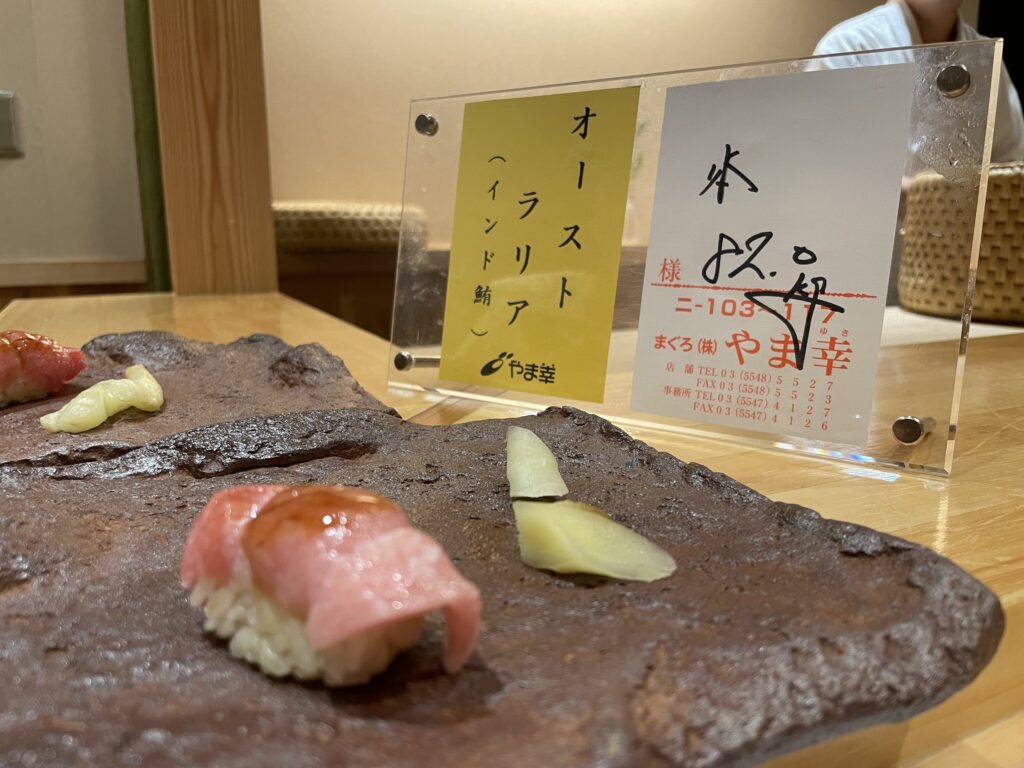
At a good sushi restaurant, much of the work happens before the guest sits down.
The fish must be selected carefully. The origin matters. The season matters. The handling after catch matters. The chef must decide whether the fish should be served immediately, rested, aged, cured, marinated, seared, or prepared in another way.
Some fish are best when extremely fresh. Others improve after controlled aging. Some need careful knife work. Some need salt, vinegar, kombu, or heat.
Even the rice is difficult.
Sushi rice is not just ordinary rice with vinegar. The choice of rice matters. New rice can be too sticky because it contains more moisture and tends to produce a texture that is difficult to handle for sushi. Older rice may be preferred because it can absorb vinegar better and hold a more suitable texture. The water level also matters. Too much water can make the rice sticky and difficult to shape.
I have tried making sushi myself, and it quickly taught me how difficult it is.
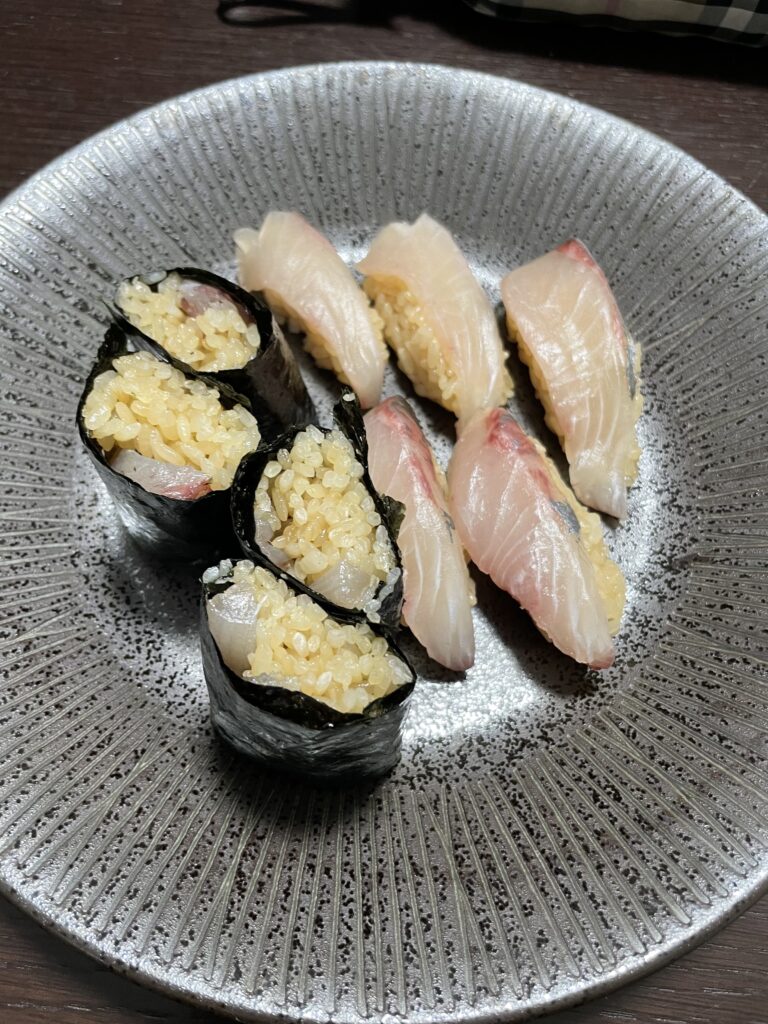
Choosing the rice was difficult. Controlling the water was difficult. Cutting the fish was difficult. Sometimes the slice was too thick. Sometimes the angle of the cut did not match the muscle fibers. Sometimes the fish looked good, but did not feel right on the rice.
That experience made me respect sushi chefs even more.
Good sushi looks simple because the work has already been done.
Can you eat the fish you catch in Japan?
This is one of the most natural questions travelers ask.
The answer is: possibly, but it must be arranged carefully.
In Japan, many restaurants do not accept outside fish. Some may accept only certain fish under certain conditions. Food safety, handling, storage, timing, and restaurant operations all matter.
However, when the conditions are right, connecting the day’s fishing to Japanese dining can be extraordinary.
Some fish are especially meaningful when experienced fresh. Sawara, or Spanish mackerel, is one example. It is a beautiful fish, but its quality can decline quickly depending on handling and time. When treated properly and served in the right condition, it can show a side of Japanese seafood that travelers may never experience through ordinary restaurants.
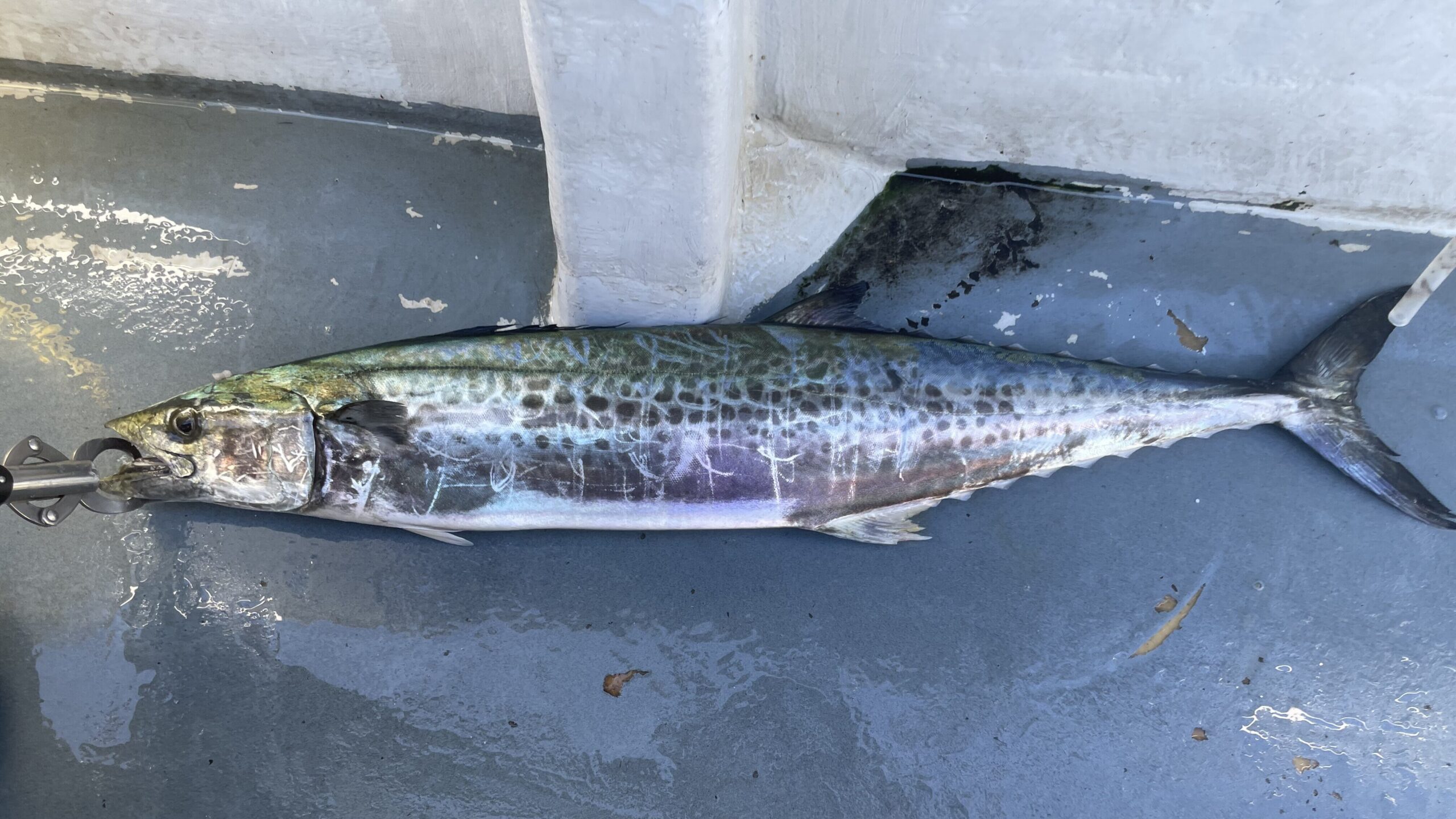
This is one reason a sea-to-table experience is powerful.
The practical challenges for foreign visitors
Arranging this alone is difficult.
First, you need to book the right fishing boat. Many fishing boats in Japan are built around local anglers, not international travelers. The port may be far from the city. Departure times may be early. Communication may be entirely in Japanese.
Next, you need the right fishing equipment and method. Jigging, casting, bait fishing, sabiki fishing, octopus fishing, and tairaba all require different tackle and knowledge.
Then you need to handle the fish properly.
Finally, you need a restaurant or chef who can prepare the dining experience safely and respectfully.
For travelers, this is too much to manage during a short trip.
That is why Catch to Table Japan exists.
We support the fishing, the communication, the preparation, the logistics, and the dining coordination when possible. The guest does not need to solve every practical issue alone.
A curated sea-to-table alternative
A private sea-to-table experience is not just a fishing trip with dinner afterward.
It is a designed day.
The host helps arrange the boat, communicate with the captain, support guests during fishing, prepare equipment, guide the group, take photos and videos, and coordinate the dining experience when possible.
The goal is to remove friction.
Guests should not have to worry about whether they brought the right lure, whether they can communicate with the captain, whether the fish can be brought to a restaurant, or whether they will miss the meaning of what they are eating.
The experience is designed so that fishing, food, and memory feel connected.
Dining options: sushi, kaiseki, and premium Japanese dining
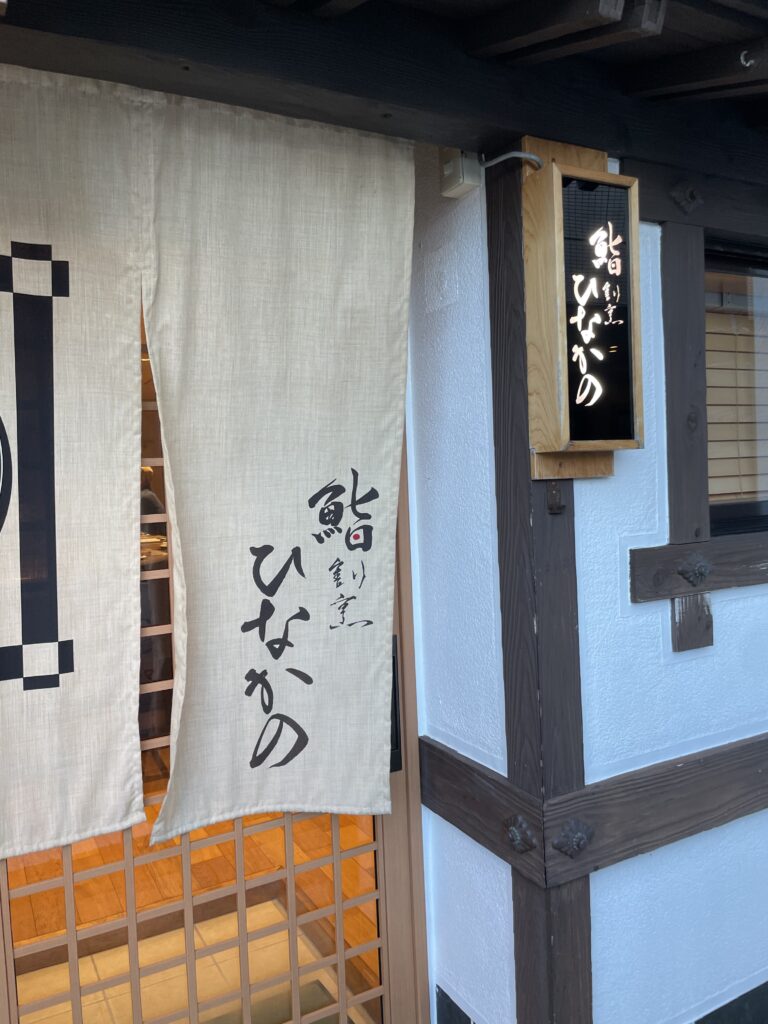
Although this article focuses on sushi, Catch to Table Japan does not limit the experience only to sushi.
Depending on the date, catch, restaurant availability, and guest preference, the dining experience may include sushi, kaiseki, kappo-style dining, sashimi, grilled fish, simmered dishes, seasonal courses, or other premium Japanese seafood preparations.
This is important because not every fish is best as sushi.
Some fish are better grilled. Some are better lightly seared. Some are better as sashimi. Some become more interesting in a course that includes soup, rice, seasonal vegetables, or sake pairings.
Kaiseki and kappo-style dining can be especially suitable because they allow the chef to express the fish in multiple ways, rather than forcing everything into nigiri sushi.
In many cases, CTTJ introduces a dining experience that includes sushi within a broader Japanese course.
That gives guests both the iconic sushi experience and a deeper view of Japanese seafood culture.
Watching the chef is part of the experience
In a good sushi or kappo setting, the experience is not only about eating.
Watching the chef work is part of the value.
You see the fish being cut. You see the rice shaped. You see the timing. You see the way the chef handles each ingredient differently. You understand that the meal is not mass-produced. It is performed in front of you.
This is one reason counter-style Japanese dining can be so memorable.
The guest does not only receive food. The guest sees the transformation from ingredient to dish.
When the fish is connected to the day you spent on the sea, that moment becomes even stronger.
How to choose a good sushi restaurant in Japan
For travelers researching restaurants in Japan, Tabelog is one of the most useful platforms.
Google Maps is widely used, but Japanese diners often use Tabelog when comparing restaurants. Its scoring system is stricter than many overseas review platforms. As a rough practical guide, a restaurant rated above 3.5 on Tabelog is often considered strong.
That does not mean every good restaurant must have a high score. Some small restaurants are excellent but under-the-radar. Some high-scoring restaurants may not match a traveler’s needs. Availability, atmosphere, language support, location, and the purpose of the meal also matter.
For a sea-to-table experience, the question is not only “Is this restaurant famous?”
The better question is:
Can this restaurant help create the right experience for this guest?
A private sushi-making experience may also be arranged
Some guests may want to go one step further and make sushi themselves.
This can also be arranged depending on the schedule, location, chef availability, and group size. A private sushi chef or instructor may be invited to teach guests how sushi is made, including rice preparation, fish cutting, and basic shaping.
This is not easy.
But that is exactly why it is valuable.
Once you try making sushi yourself, you understand that it is not just fish on rice. You understand the skill involved in rice, knife work, pressure, balance, and timing.
If you are interested in a private sushi-making tour or chef-arranged experience, please contact us through the inquiry form.
Plan a Fishing and Sushi Experience in Japan
A fishing and sushi experience in Japan is not just about catching fish and eating dinner.
It is about understanding the connection between the sea, the fish, the chef, the rice, the knife work, the season, and the memory of the day.
Catch to Table Japan creates private sea-to-table experiences for international travelers who want more than a standard fishing charter or restaurant reservation.
If you want to experience real Japanese sushi or premium seafood dining connected to a private day on the sea, we can help arrange the experience around your group.
Plan a Fishing and Sushi Experience in Japan.
FAQ
Is this suitable for beginners?
Yes. The fishing plan can be adjusted based on the guest’s experience level. Beginners can choose easier fishing methods when conditions allow.
What makes Japanese sushi different from overseas sushi rolls?
Overseas sushi rolls can be delicious, but traditional Japanese sushi focuses more on the balance of fish, rice, vinegar, temperature, knife work, and timing. High-end sushi is not simply fish placed on rice.
Can we arrange a private sushi-making experience?
Yes. Depending on chef availability, location, schedule, and group size, a private sushi-making experience may be arranged. Please contact us through the inquiry form.
Where does the experience take place?
The experience is mainly arranged around Osaka Bay or Miyazu Bay in Kyoto, with dining options in the Kansai area depending on the plan. Other regions may be possible upon request.
How do we book?
Please send your preferred date, group size, hotel location, fishing experience level, and dining preferences through the inquiry form. We will prepare a private proposal.